
The skin is the body’s largest immune organ. We study how it fights, fails, and heals.
We work on inflammasome biology, caspase signaling, and immune metabolism — in S. aureus infection, atopic dermatitis, and psoriasis. The goal is biomarkers and host-directed therapies for disease that antibiotics can no longer reach.
Department
Dermatology
Institution
Johns Hopkins Medicine
Location
Baltimore, Maryland
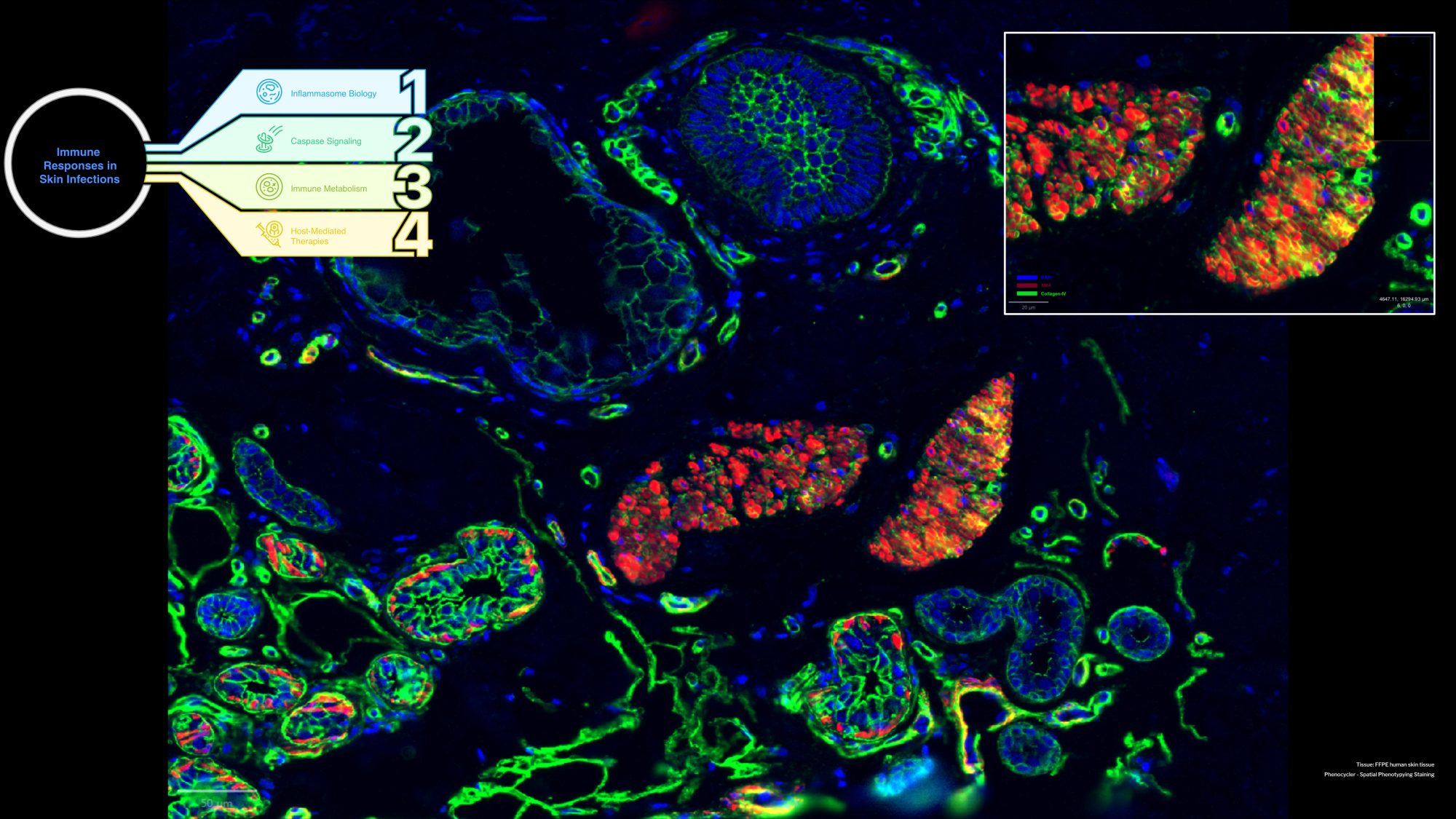
Research programs
01
Antibiotic resistance
Host-directed alternatives to antibiotics for MRSA and other bacterial skin infections.
02
Immunometabolism
How immune cell metabolism shapes function, inflammation, and bacterial clearance.
03
Inflammatory skin disease
Mechanisms in atopic dermatitis, psoriasis, and prurigo nodularis.
04
Tissue regeneration
Repair and regeneration of skin following infection and injury.
The burden we work against
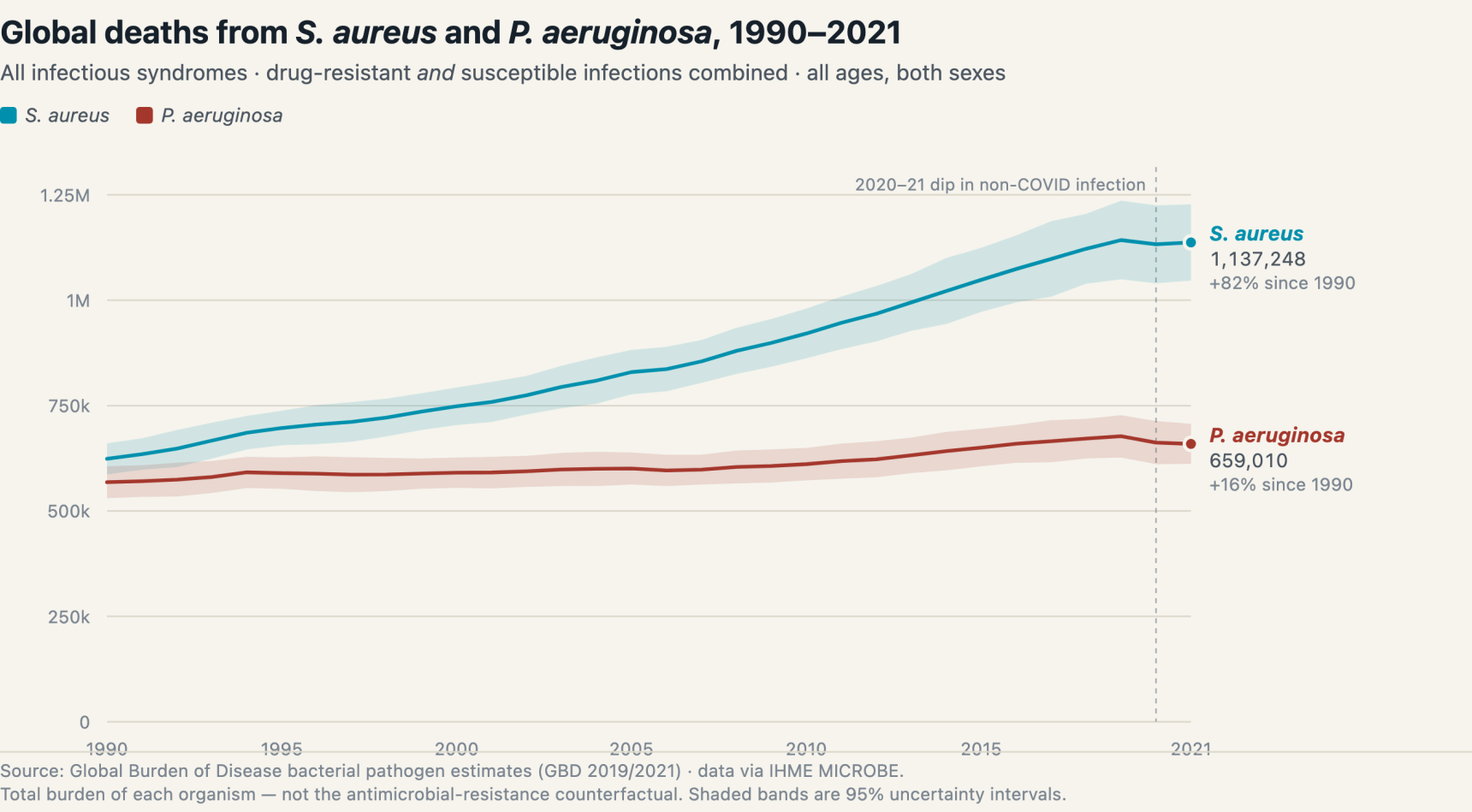
S. aureus is the leading bacterial cause of death worldwide. Since 1990 its global toll has risen by 82%, while P. aeruginosa has risen 16% — opening a gap that barely existed three decades ago.
Recent from the lab
JID Innovations · 2025
Nanda N, Kim C, Jain I, Cai C, Alphonse MP
Biomolecules · 2024
From host defense to metabolic signatures: unveiling the role of γδ T cells in bacterial infections
Nanda N, Alphonse MP
Drug Development Research · 2023
An oral caspase inhibitor as monotherapy or with antibiotics eradicates MRSA skin infections in mice
Cahill E, Oladipo OO, Dikeman D, Prifti D, Mento SJ, Miller LS, Alphonse MP
The team

Martin P. Alphonse
Principal Investigator
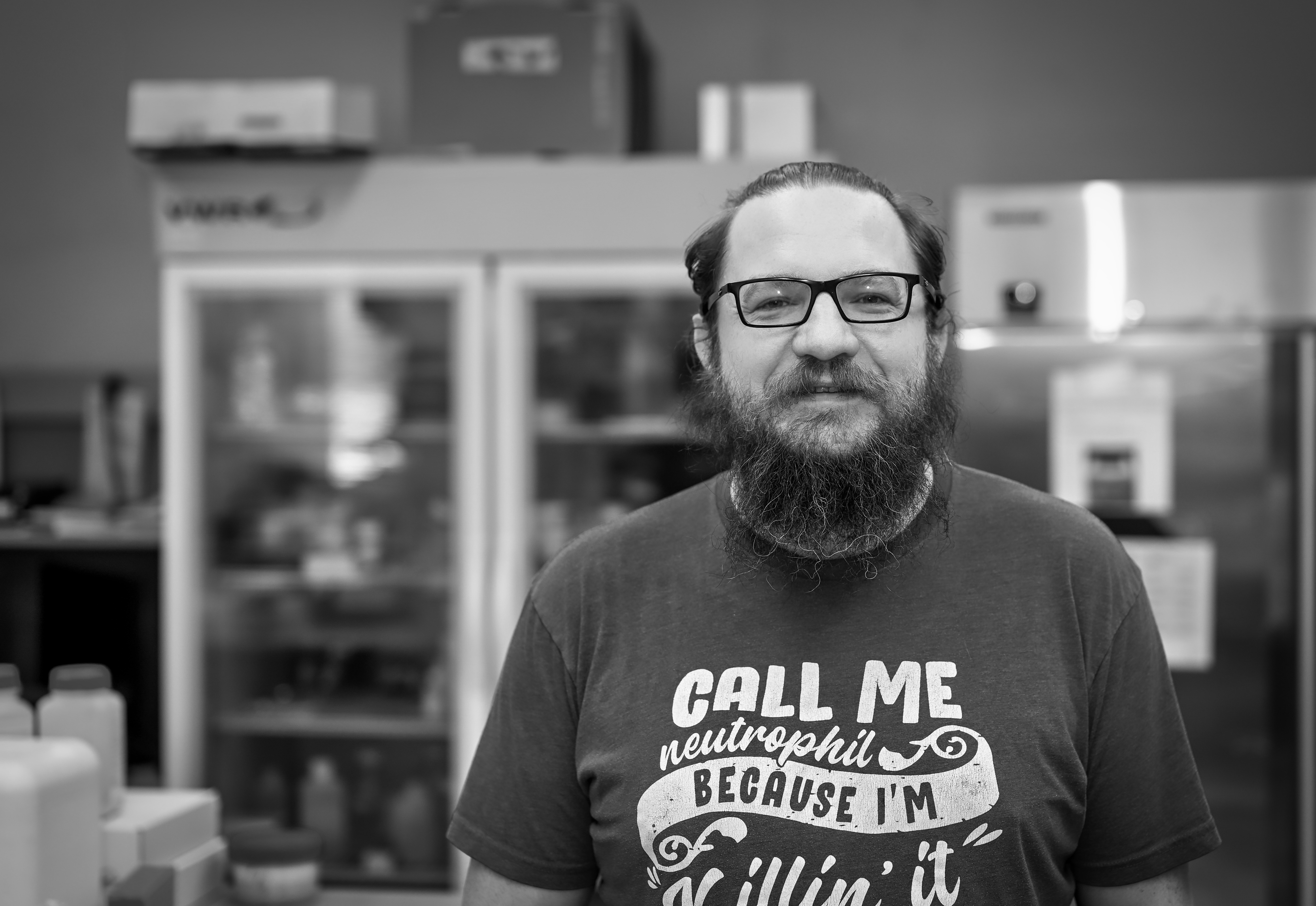
Dustin Dikeman
Lab Manager

Darshan Sivaloganathan
Medical Student

Namya Nanda
Medical Student
We’re recruiting.
Come do skin immunology with us.
Postdoctoral fellows, medical students seeking a year out, research technologists, and undergraduates who can commit beyond a year.

